Putting Down the Phone and Picking Up a Pen: America's Analog Awakening
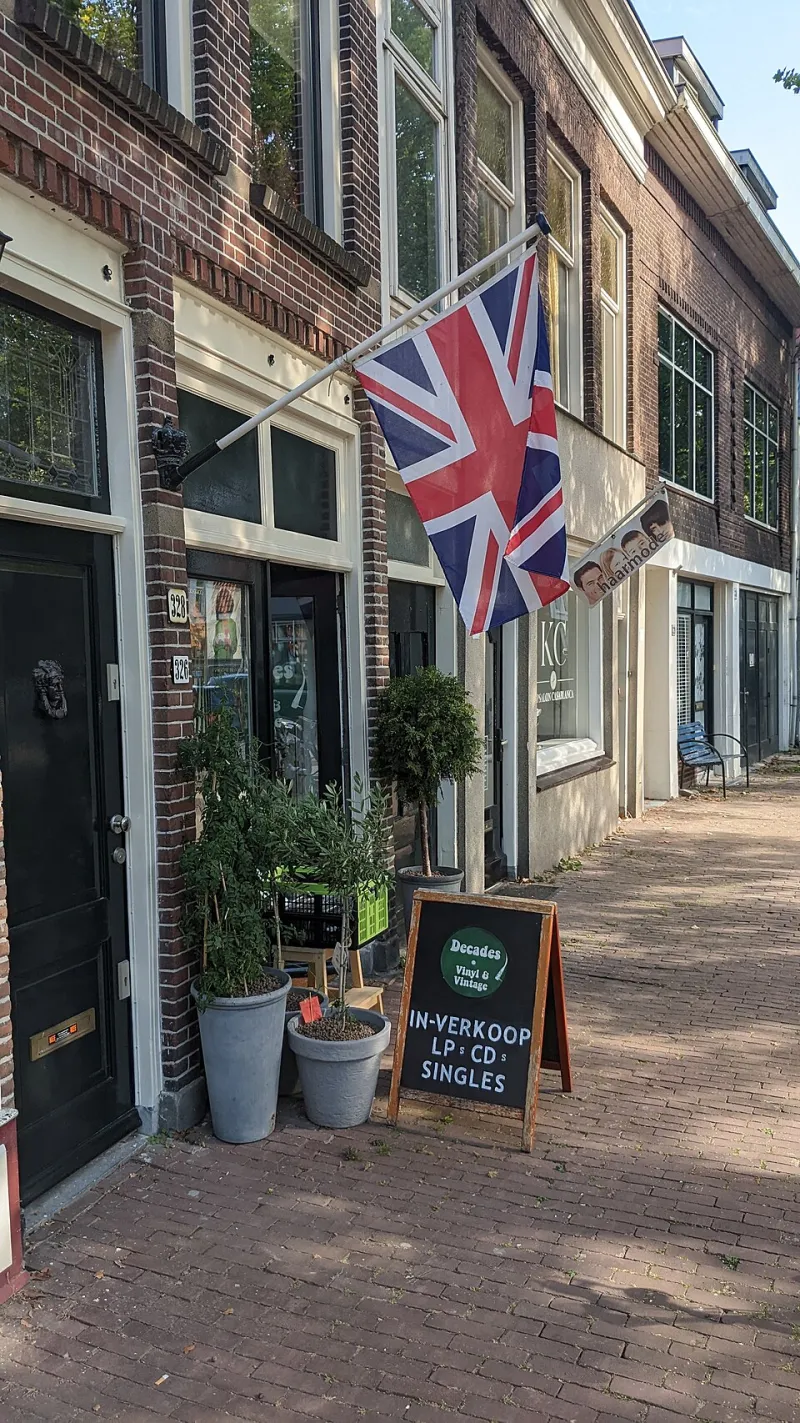
Photo: Donald Trung Quoc Don (Chữ Hán: 徵國單) - Wikimedia Commons - © CC BY-SA 4.0 International.(Want to use this image?)Original publication 📤: --Donald Trung 『徵國單』 (No Fake News 💬) (WikiProject Numismatics 💴) (Articles 📚) 20:28, 8 September 2022 (UTC), C
Somewhere in a Brooklyn apartment, a 27-year-old graphic designer named Sasha Merritt is developing film in her bathroom. She shot a roll of 35mm at her friend's birthday last weekend — nothing fancy, just a disposable camera she picked up at a drugstore. The photos won't be ready for days. She has no idea how they'll turn out. And that, she says, is entirely the point.
"Every other part of my life is instant and optimized and trackable," Sasha explained. "Having something that just... takes time, and might not be perfect — it feels like breathing room."
Sasha is part of a quietly growing movement that's showing up in record stores, stationery shops, and thrift stores across the country. Call it the analog revival. Call it the anti-algorithm lifestyle. Whatever you name it, the pattern is the same: people are deliberately choosing slower, older, less connected ways of doing things — not out of nostalgia, but out of something closer to survival.
The Screen Fatigue Nobody Wants to Admit
Let's be honest about the backdrop here. Americans are exhausted in a very specific, very modern way. It's not the tired-from-hard-labor kind — it's the frayed, scattered, can't-finish-a-thought kind that comes from a brain that has been context-switching between apps, notifications, headlines, and algorithmic content for the better part of a decade.
Research from the American Psychological Association consistently identifies technology use as a significant source of stress for American adults. Screen time averages have crept past seven hours a day for many adults. Attention spans — though the "goldfish" statistics get overstated — have measurably shifted. And the mental health conversation in the US has started to center something new: not just anxiety and depression as standalone conditions, but a kind of chronic cognitive overload that doesn't have a clean diagnostic label but that millions of people recognize immediately when you describe it.
The analog turn is, in many ways, a response to exactly that.
What Analog Actually Looks Like in 2025
The aesthetic is visible everywhere if you know where to look. Vinyl record sales in the US have outpaced CD sales for three consecutive years — a fact that would have seemed absurd to predict in 2010. Film photography is no longer a niche pursuit; Kodak has reintroduced discontinued film stocks, and camera stores that nearly shuttered during the DSLR era are reporting renewed foot traffic from young buyers.
Handwritten journaling has become a genuine cultural phenomenon, with the "journaling" hashtag accumulating billions of views on TikTok — which is, yes, a slightly ironic place to celebrate analog habits, but the internet contains multitudes. Leuchtturm and Moleskine notebooks are backordered on Amazon. Fountain pen communities have exploded. And typewriters — actual, mechanical typewriters — are being sold at a pace that has vintage dealers genuinely scrambling for inventory.
None of this is accidental, and very little of it is purely aesthetic.
Style as Self-Defense
Here's what makes the analog revival interesting from a cultural standpoint: it's functioning as a form of personal style with ideological weight. Choosing to write in a journal instead of typing into Notes isn't just a preference — it's a statement about what kind of relationship you want to have with your own attention.
That's a meaningful shift. For the last fifteen years, "being connected" was aspirational. The person who had the latest device, the fastest setup, the most optimized workflow was the person who had it together. What's changing now is the direction of the flex. Increasingly, the culturally interesting move is disconnection. The person who leaves their phone in another room during dinner, who sends handwritten thank-you notes, who listens to an entire album without skipping — that person is projecting a kind of intentionality that reads as sophisticated rather than behind the times.
It's a style shift as much as a wellness one, which is probably why it's sticking.
The Mental Health Case for Going Slow
Psychologists and neuroscientists have started paying attention to what analog practices might actually do for the brain. Dr. Elena Vasquez, a cognitive psychologist based in San Francisco, points to the concept of "deep attention" — the ability to focus on a single task without interruption — as something that analog activities naturally cultivate.
"When you're developing film, or writing by hand, or playing a record, the activity itself enforces a kind of presence," she explained. "You can't skim a handwritten letter the way you skim a text. The medium slows you down, and that slowness has real cognitive benefits — better retention, lower cortisol response, more creative thinking."
There's also something to be said for the tactile dimension. Screens are frictionless by design — everything is smooth, responsive, immediate. Analog objects push back. A typewriter key has resistance. A pen runs dry. Film has grain. That physical friction, counterintuitive as it sounds, seems to anchor people in a way that frictionless digital experience doesn't.
Not Nostalgia — Something Sharper
It's worth being precise about what's driving this, because the nostalgia framing misses the point. Most of the people diving into film photography or vinyl weren't alive for the golden age of those formats. A 24-year-old buying a record player isn't recreating their childhood — they never had one. What they're doing is something more deliberate: choosing a technology specifically because of its limitations.
That's a genuinely new cultural move. We've spent decades treating technological advancement as an unambiguous good, with more features and more speed always being better. The analog revival quietly challenges that assumption. It says: actually, some constraints are valuable. Some slowness is the feature, not the bug.
For Sasha Merritt, waiting for her film to be developed isn't a frustration — it's the whole point. "I don't know what I got," she said. "And for a little while, I'm not supposed to know. That's kind of a miracle right now."
In a culture that has made instant access to everything feel like a baseline expectation, maybe the most radical thing you can do is wait.