The New Luxury Is Doing Absolutely Nothing — and America Is Finally Catching On
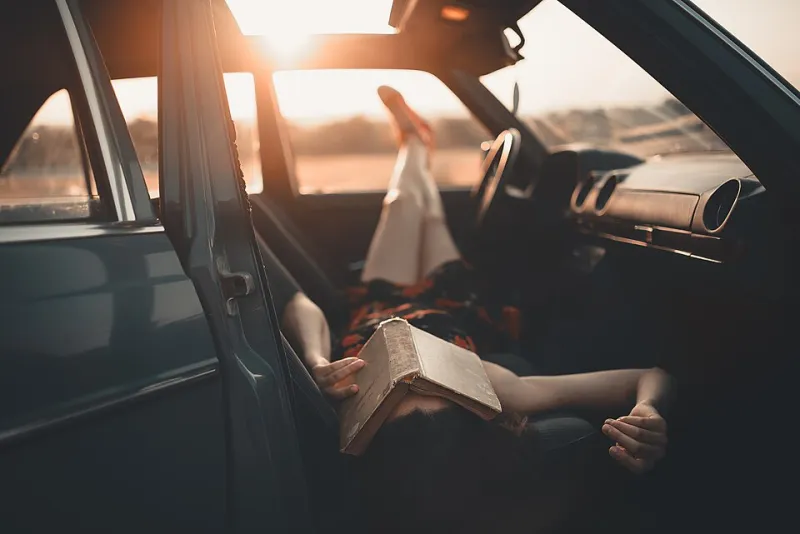
Photo: Shixart1985, CC BY 2.0, via Wikimedia Commons
For most of the past decade, the coolest thing you could be was busy. Not just busy — visibly, performatively, almost violently productive. You optimized your mornings. You had a side hustle. You tracked your macros, your steps, your sleep cycles, your screen time. You turned rest into a project and called it self-care.
And then, somewhere between the third pandemic year and the fifth notification about a sale you didn't ask to be notified about, something cracked.
The new status symbol isn't a packed calendar or a side hustle with a Shopify store. It's the ability — and increasingly, the audacity — to do absolutely nothing. On purpose.
The Rise of Intentional Idleness
Let's be clear about what we're actually talking about here. This isn't laziness, and it's not the passive kind of zoning out that happens when you spend four hours doom-scrolling before bed. Intentional idleness is deliberate. It's choosing unstructured time and protecting it like it's your most valuable asset — because, increasingly, it is.
The signals are everywhere once you start looking. "Boring girl" aesthetics have been circulating on TikTok and Instagram for the better part of two years — a visual language built around linen, slow mornings, paperback books, and the conspicuous absence of anything that looks like a hustle. The appeal isn't just aesthetic. It's aspirational. The boring girl isn't grinding. She's already arrived.
Phone-free travel has gone from a quirky preference to a full-blown market segment. Resorts and retreat centers that advertise digital detox packages are booking out months in advance. Some properties have started charging a premium specifically for rooms where the Wi-Fi doesn't reach — and people are paying it, happily.
And then there are the do-nothing cafes, a concept imported from Japan (where the practice of ma — embracing negative space — has deep cultural roots) and quietly taking hold in cities like Portland, New York, and Los Angeles. You pay for a seat, maybe a drink, and the implicit agreement is that absolutely nothing is expected of you. No laptops. No networking. No content creation. You just... sit.
When Rest Becomes a Flex
Here's the uncomfortable truth buried in all of this: idleness has become a luxury marker in a way that reveals a lot about who actually gets to rest in America.
The ability to truly disconnect — to take a phone-free vacation, to spend a Saturday afternoon doing nothing in particular, to resist the pressure to monetize your free time — requires a kind of economic and professional security that isn't evenly distributed. When a gig worker misses a shift, they lose income. When a salaried knowledge worker takes a digital detox weekend, they get to post about it on Monday.
That tension is real, and it's worth naming. But it doesn't fully explain why the aesthetic of doing nothing has spread so far beyond the people who can easily afford it. The "boring girl" vibe resonates with 22-year-olds working retail just as much as it does with remote workers in Marin County. The aspiration isn't just about money — it's about something deeper.
What people are really craving, it seems, is permission. Permission to stop performing productivity. Permission to exist without an output.
The Burnout Context Nobody Can Ignore
None of this is happening in a vacuum. The American Psychological Association has been tracking stress and burnout levels for years, and the numbers have been grim since at least 2020. Workplace burnout in particular has reached a kind of cultural saturation point — it's no longer just a buzzword, it's a shared lived experience that crosses industries and income levels.
The hustle culture that dominated the 2010s didn't just fail to deliver on its promises of fulfillment. For a lot of people, it actively made things worse. The optimization mindset that was supposed to make you more effective just made every waking hour feel like it needed to justify itself. Leisure became productivity-adjacent. Hobbies needed to be monetizable. Vacations needed to be Instagrammable. Even sleep got turned into a performance metric.
The counterreaction to all of that isn't surprising. What is surprising is how quickly it's become coded as aspirational rather than just as relief.
Style as Statement
This is where the fashion angle gets genuinely interesting, because the aesthetics of intentional idleness are remarkably specific. It's not just about wearing comfortable clothes — it's about a particular visual vocabulary that communicates I have opted out.
Think: undone linen. Worn-in leather. Muted palettes. Minimal jewelry. The absence of anything that looks like it was chosen to signal effort. It's the style equivalent of a shrug — but a very deliberate, very curated shrug.
Brands have noticed. The boom in "quiet luxury" that dominated fashion conversation over the past couple of years is adjacent to this, but not identical. Quiet luxury is still about wealth signaling — just doing it subtly. The boredom aesthetic goes further. It's not just saying I don't need to show off. It's saying I don't need to be interesting right now, and I'm at peace with that.
That's a harder thing to manufacture, which is probably why it reads as authentic when it lands right.
What We're Actually Saying When We Celebrate Stillness
At its core, the reclamation of boredom is a cultural argument about what human beings are actually for. Are we here to produce, optimize, and perform? Or is there something valuable about existing without a deliverable?
America has historically answered that question pretty firmly in favor of productivity. Our national mythology is built on it. But cracks have been forming for a while, and the pandemic — for all its horror — did accelerate a genuine reassessment of what a good life actually looks like.
People are pushing back. Not with manifestos, but with linen trousers and a turned-off phone and a Sunday afternoon with nowhere to be.
Maybe that's enough. Maybe that's the whole point.