We Broke a Generation: America's Quiet Crisis of Not Knowing How to Do Anything
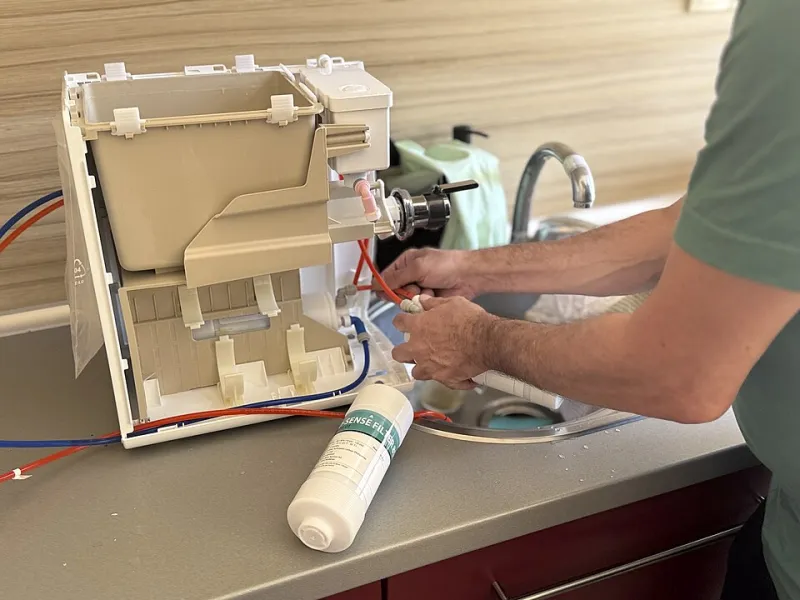
Photo: Shixart1985, CC BY 2.0, via Wikimedia Commons
Somewhere between the rise of the gig economy and the invention of TaskRabbit, something quietly slipped away. Not dramatically. Not in a way anyone really noticed until they were standing in their kitchen at 10 p.m. on a Sunday, watching a YouTube tutorial with shaking hands, trying to figure out why the sink won't stop draining backward.
We lost the ability to do things ourselves — and most of us didn't even realize it was happening.
The Outsourcing of Everything
Let's be real about what the last two decades actually built. Convenience culture promised us freedom. Order your groceries. Hire someone to hang your curtains. Subscribe to a service that changes your oil. On paper, it sounds like optimization. In practice, it's turned a staggering number of Americans into functional dependents — capable of managing apps but stumped by a circuit breaker.
A 2023 survey by the Home Improvement Research Institute found that fewer than 30% of Americans under 40 feel confident performing basic home repairs. Not complex renovations — basic repairs. Replacing a light switch. Unclogging a drain. Tightening a door hinge. Skills that used to pass naturally from parent to child are now vanishing in a single generation.
Car maintenance tells a similar story. According to the Auto Care Association, the number of Americans who perform any DIY vehicle upkeep has dropped by nearly half since 2000. Many people in their twenties and thirties have never checked their own oil. Some don't know where to look for it.
This isn't about shaming anyone. It's about asking a harder question: what does it cost us, psychologically and practically, when we can no longer take care of the most immediate parts of our lives?
The Hidden Price Tag of Helplessness
Dr. Renee Engeln, a psychology professor at Northwestern University who studies body image and self-perception, has written extensively about what she calls "learned helplessness in domestic contexts" — a modern spin on a concept Martin Seligman first described in the 1960s. The original theory was about animals conditioned to stop trying when they believed their actions had no effect. The contemporary version, Engeln argues, shows up when people repeatedly outsource decisions and tasks until they genuinely stop believing they're capable of handling them.
"There's a real confidence erosion that happens," she explained in a recent interview. "Every time you call someone else to handle something you could theoretically do yourself, you're reinforcing a story that you're not capable. Over time, that story becomes part of your identity."
That identity shift has real consequences. People who report low practical self-efficacy — the belief that they can handle physical, mechanical, or logistical challenges — also tend to report higher baseline anxiety. The world feels more fragile when you don't trust yourself to manage it.
And then a pandemic happened. Suddenly, supply chains broke, service workers became unavailable, and millions of Americans discovered they had no fallback. No skills to draw from. No confidence to try.
How We Got Here
It's worth understanding that this didn't happen by accident. Shop class got cut from public schools starting in the 1990s, when the push for college-prep curricula quietly declared vocational education less valuable. Home economics followed. Entire skill sets that had been institutionally passed down were simply removed from the curriculum — not replaced, just gone.
At the same time, the housing market shifted. Apartments replaced starter homes for millions of millennials, removing both the opportunity and the incentive to learn repair skills. Why learn to patch drywall when you're renting and the landlord is technically responsible anyway?
And then there's the marketing machine. Every new service economy startup is built on the premise that your time is too valuable to spend on tasks. Which sounds empowering until you realize that the tasks they're replacing are often the exact ones that build confidence, competence, and a sense of agency in your own life.
The Quiet Revolution Happening in Garages Across America
Here's the thing, though: people are noticing. And some of them are pushing back in the most practical ways possible.
Community repair cafes — volunteer-run spaces where people bring broken items and learn to fix them — have multiplied across the U.S. in the last five years. The Repair Café Foundation now lists over 3,000 active locations worldwide, with American chapters growing fastest in cities like Portland, Austin, and Philadelphia.
YouTube channels dedicated to practical skills — plumbing, electrical basics, automotive repair — are pulling in millions of subscribers. Not just views, subscribers. People returning, building knowledge, treating it like an ongoing education rather than a one-time fix.
And in cities where DIY culture has taken root, something interesting is happening socially. People are gathering around shared skill-building the way a previous generation gathered around bars. Welding workshops. Fermentation clubs. Basic auto maintenance courses at community colleges that have waiting lists for the first time in years.
How to Start Reclaiming What You've Lost
If any of this is landing a little close to home, here's where to actually start — without overwhelm.
Pick one thing. Not a list. One skill that feels mildly embarrassing not to have. Maybe it's changing a flat tire. Maybe it's resetting a tripped breaker. Maybe it's cooking something that doesn't come from a box. Start there.
Use video, but commit to doing it. YouTube is genuinely excellent for learning practical skills, but passive watching doesn't build competence. Watch once, then do it while the video plays. Struggle through it. The struggle is the point.
Find a community. The repair cafe model works because learning alongside other people changes the emotional stakes. You're not proving something — you're just figuring stuff out together. Look for maker spaces, community workshops, or even just a neighbor who's handy and willing to show you something.
Reframe the cost. Learning to do something yourself isn't always cheaper than outsourcing it in the short term. But the skill compounds. The confidence compounds. The second time is always easier. The tenth time, it's just something you do.
Self-Sufficiency Isn't Nostalgia — It's a Form of Freedom
There's a version of this conversation that gets sentimental. That romanticizes a past where everyone churned their own butter and built their own furniture and that was somehow more authentic. That's not what this is.
This is about something more contemporary: the recognition that dependency, at a certain scale, becomes its own kind of trap. That the convenience economy, for all its genuine benefits, also has a way of quietly narrowing what you believe you're capable of.
Knowing how to handle the physical world around you — even imperfectly, even slowly — is a form of confidence that doesn't come from any app. It comes from doing. From trying and failing and trying again until the sink stops leaking and you're standing there with dry hands and the quiet, slightly ridiculous satisfaction of having fixed something yourself.
That feeling? It's worth chasing. And it starts with deciding you're someone who can.