Forget Brunch — Young Americans Are Bonding Over Bread Baking and Blacksmithing
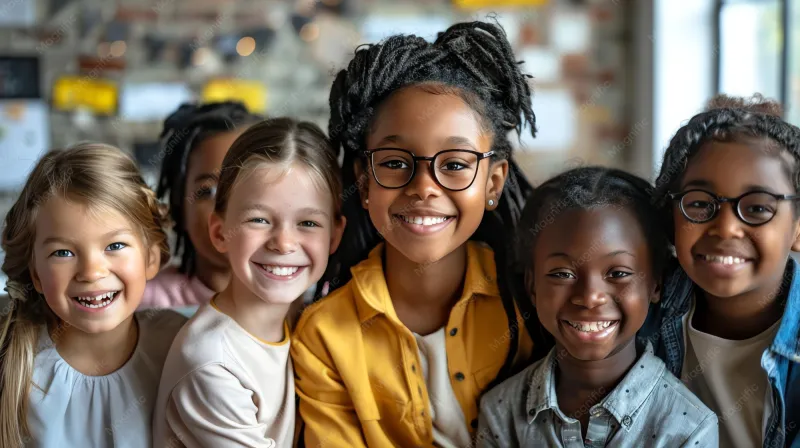
Photo: young adults pottery class laughing together workshop, via img.freepik.com
There's a Tuesday night in a Brooklyn apartment where six people who barely knew each other three months ago are now crowded around a kitchen counter, arguing — lovingly — about hydration ratios for sourdough starter. Nobody's checking their phones. Nobody's networking in the traditional sense. And yet, somehow, two of them have already started a small side business together.
This is what hanging out looks like now for a growing slice of millennials and Gen Z across the US. Not bottomless mimosas. Not rooftop bars. Skill swaps.
The concept is simple: you teach me something you know, I teach you something I know. But the cultural shift underneath it is anything but simple.
From Small Talk to Real Talk
For years, social scripts for young adults have followed a pretty predictable pattern. Coffee catch-ups. Happy hours. The occasional dinner party where everyone ends up talking about the same three topics. It's fine — but it's also kind of hollow.
What skill-sharing communities offer is a built-in reason to actually do something together. And doing something together, it turns out, is one of the fastest ways to actually get to know a person.
"When you're learning alongside someone, you see how they handle frustration, how they celebrate small wins, how patient they are," says Maya, a 29-year-old graphic designer in Austin who co-organizes a weekly ceramics swap out of her garage. "You learn more about someone in two hours of throwing clay than you do in six months of texting."
That sentiment is echoing across cities. In Chicago, there are informal groups trading photography skills for home repair know-how. In Los Angeles, people are swapping language lessons for cocktail-making tutorials. In Portland — predictably, but also genuinely — fermentation circles have become some of the most tightly-knit social communities in certain neighborhoods.
The Anti-Consumerism Angle
It's worth pausing on what's not happening in these spaces. Nobody's paying $45 for a ticketed event. Nobody's consuming a product. The entire premise flips the typical American leisure model on its head — instead of spending money to be entertained, people are investing time to build something real.
For a generation that grew up watching the 2008 financial crisis gut their parents' savings, and then entered adulthood into a pandemic economy, that distinction matters. Ownership of practical knowledge feels like a form of financial resilience. Knowing how to fix a leaky faucet, bake your own bread, or grow herbs on a windowsill isn't just charming — it's genuinely useful when money is tight.
"There's a security in skills that you just don't get from stuff," says Jordan, a 26-year-old in Denver who runs a small skill-share meetup he started after losing his restaurant job in 2020. "Nobody can repossess what's in your head."
Which Skills Are Trending Where
Not all skill swaps are created equal, and geography plays a surprisingly big role in what's hot.
In cities like Nashville and Austin — both experiencing massive demographic influxes — bartending and cocktail knowledge has become a genuine social currency. People moving to new cities use mixology nights as an icebreaker that doesn't feel forced.
In the Pacific Northwest and parts of the Northeast, outdoor and foraging skills are having a serious moment. Mushroom identification walks in Seattle. Wild herb harvesting in Vermont. These aren't niche survivalist activities anymore — they're date alternatives.
In the South, particularly in cities like Atlanta and New Orleans, food preservation and canning have made a quiet comeback, blending cultural tradition with millennial interest in sustainability. Grandma's recipes are getting passed down not just through families, but through neighborhood skill circles.
And in pretty much every major metro area, some version of textile craft — knitting, weaving, natural dyeing — is showing up in living rooms and community centers, carried largely by Gen Z's embrace of slow fashion.
The Psychology of Learning Together
There's actual science backing up why this kind of bonding works so well. Shared vulnerability — and yes, being a beginner at something is a form of vulnerability — accelerates trust. When you mess up your first attempt at knife sharpening in front of someone, and they laugh with you instead of at you, something shifts.
Psychologists call this the "pratfall effect": people tend to feel more warmly toward others who show imperfection. Skill-sharing environments are basically a controlled setting for productive imperfection. Everyone is bad at something. That equalizes the room.
It also gives introverts a fighting chance. For people who find unstructured socializing genuinely exhausting, having a task to focus on is a relief. The skill is the conversation starter. You never have to wonder what to talk about.
Is This the New Networking?
Here's where it gets interesting for anyone watching cultural trends: these spaces are also quietly becoming economic ecosystems.
The sourdough group in Brooklyn? Two members now sell bread at a local farmers market. The cocktail circle in Nashville? One participant landed a part-time bar gig off the back of skills she picked up in someone's living room. The ceramics swap in Austin has produced two Etsy shops and a pop-up collab.
None of that was the point. But it happened anyway, organically, because people who build things together tend to trust each other enough to build more things together.
Traditional networking events — the ones with name tags and elevator pitches — have always felt a little transactional. This is the opposite. The relationship comes first. The opportunity, if it comes at all, is a byproduct.
What It Says About Us Right Now
The rise of skill-sharing as a social format says something real about where a lot of younger Americans are emotionally. After years of pandemic isolation, algorithmic social media, and the general exhaustion of performing a curated self online, people are hungry for something analog and honest.
Learning a physical skill — something that requires your hands, your attention, and your patience — is almost aggressively present-tense. You cannot scroll while you're throwing pottery. You cannot half-listen while someone is teaching you how to sharpen a knife.
And maybe that's the whole point. In a culture that has optimized almost every experience for convenience and speed, there's something quietly radical about choosing to be slow, to be a beginner, to be in the room.
Brunch will always have its place. But if you're looking for where the genuinely interesting connections are forming right now, check the ceramics studio. Check the garage fermentation lab. Check the living room where six people are arguing, warmly, about sourdough.
That's where the good stuff is happening.