Opening Every Cabinet and Facing the Truth: America's New Obsession With Knowing What They Own
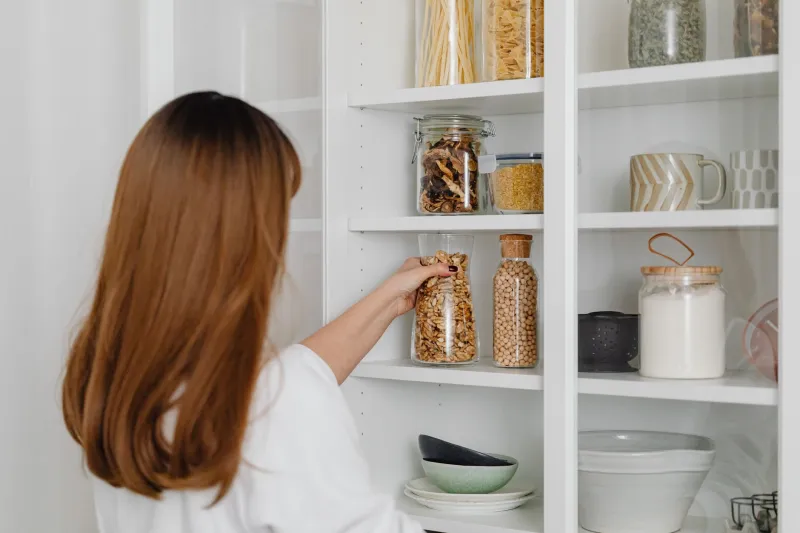
Somewhere between the third can of coconut milk she couldn't remember buying and a jar of tahini with a 2021 expiration date, Renata, a 34-year-old teacher from Columbus, Ohio, had what she describes as a genuine reckoning. She'd pulled everything out of her pantry on a Saturday morning — just to "get organized" — and ended up sitting on her kitchen floor for two hours, staring at the evidence of years of impulse buys, forgotten meal-prep phases, and sale-section optimism.
"I spent probably sixty dollars on stuff I already owned," she told a Reddit thread that now has thousands of upvotes. "I had four bottles of soy sauce. Four."
Welcome to the pantry audit — and its close cousins, the closet audit, the bathroom cabinet audit, and the garage audit. Call it what you want: an inventory, a stuff reckoning, a radical act of paying attention. Whatever the name, Americans are doing it in huge numbers, posting the results online, and finding the whole experience equal parts humbling and weirdly cathartic.
It Started in the Kitchen, But It Didn't Stay There
The pantry audit went viral in a fairly quiet way. No single celebrity endorsed it. There wasn't one defining TikTok moment. Instead, it spread through a slow accumulation of relatable confessions — people sharing photos of duplicate spice jars, half-used condiments, and pantry staples they'd bought three times because they forgot they already had them.
Food waste content has been building momentum for a while, driven partly by influencers in the "use what you have" cooking space and partly by genuine anxiety about grocery prices. When eggs hit five dollars a dozen and a rotisserie chicken started feeling like a luxury, people got more interested in actually knowing what was already in their homes.
But the trend quickly expanded beyond food. The same energy that sent people into their pantries also pushed them into their closets — counting how many black T-shirts they owned, discovering three identical pairs of jeans bought during separate "I need new jeans" spirals, finding gym clothes still tagged from 2019. Then came the bathroom cabinets. The linen closets. The storage units. The junk drawers that turned out to contain, among other things, five tape measures and zero working pens.
The Numbers Are the Point
What makes this trend distinct from general decluttering — which has been popular since Marie Kondo made folding a spiritual practice — is the emphasis on counting. People aren't just tidying up. They're documenting. Spreadsheets are involved. Running tallies of estimated value. Calculations of how much was spent on duplicates.
One woman posted a breakdown showing she owned enough shampoo, conditioner, and body wash to last approximately two years without buying another bottle. Someone else counted 47 items of clothing still bearing tags. A guy in Phoenix inventoried his garage and estimated he'd spent over $800 on tools he'd forgotten he owned and subsequently re-bought.
The numbers have a way of making abstract overconsumption feel very concrete. It's one thing to know, intellectually, that you buy too much stuff. It's another thing to see it written down in a Google Sheet.
There's also a social accountability element happening in real time. People share their counts in Facebook groups, subreddits, and comment sections, and the community responses tend to be warm and non-judgmental — a chorus of "same," "omg I found the same thing," and "you are not alone." The audit becomes a collective confession rather than a private shame spiral.
Anxiety in a Can of Chickpeas
Psychologists and financial counselors who've commented on the trend point to what's really driving it: a low-grade, persistent anxiety about money and consumption that's been building for years and finally needs somewhere to go.
Americans have been living through a strange economic whiplash. Pandemic-era spending habits — the online shopping, the comfort buying, the "treat yourself" justifications — collided with inflation, rising rents, and a general sense that financial security is harder to hold onto than it used to be. The result is a lot of people who feel vaguely guilty about their stuff without being entirely sure why.
The pantry audit gives that feeling a task to perform. Instead of just worrying about money in the abstract, you open the cabinet and count. You put a number on it. And somehow, that act of witnessing — even when the results are embarrassing — feels better than not knowing.
There's also something about the audit that functions as a reset button. People report feeling calmer after completing one, not because their finances magically improved, but because uncertainty got replaced with actual information. The anxiety of vague excess is apparently worse than the discomfort of specific, documented excess.
The Anti-Haul Economy
The pantry audit trend fits neatly into a broader cultural shift that's been building across lifestyle spaces: the move away from acquisition as identity. For years, haul culture dominated — the thrill of buying, the performance of unboxing, the constant churn of new things entering the home. That energy hasn't disappeared, but it's been joined by a growing counter-movement that finds equal satisfaction in the opposite direction.
The "no-buy" and "low-buy" communities have exploded in size. "Use what you have" is a genuine lifestyle philosophy for a significant number of Americans now, not just a temporary budget measure. Thrifting has long since gone mainstream. And the pantry audit slots perfectly into this worldview — it's the act of discovering that what you already own is, actually, a lot.
For some people, the inventory becomes a shopping ban. They commit to not buying anything in a given category until they've worked through what they have. For others, it leads to selling, donating, or giving things away — a redistribution of accumulated excess. Either way, the audit functions as a pause button on the default consumer setting that most of us run on without thinking too hard about it.
What You Find When You Actually Look
There's a version of this trend that's purely practical — save money, reduce waste, get organized. But there's another version that's more philosophical, and it's the one people seem to talk about most.
When you pull everything out and count it, you're also confronting the person who bought all of it. The optimistic person who thought they'd get into sourdough. The anxious person who stockpiled hand sanitizer and never stopped. The aspirational person who bought the fancy olive oil they never actually used. The tired person who kept buying the same thing because looking for it felt like too much work.
That's the part that hits differently. The pantry isn't just food. It's a record of moods, intentions, impulses, and phases — a physical archive of who you were trying to be at various points in time.
Maybe that's why so many people describe the audit as unexpectedly emotional. You're not just counting cans. You're reading your own history in the things you kept, forgot, and bought again anyway.
And somehow, once you've done that — once you've actually looked — it gets a little easier to stop.